

A home that doesn't need electricity bills: the first energy-independent neighborhood in Central Asia
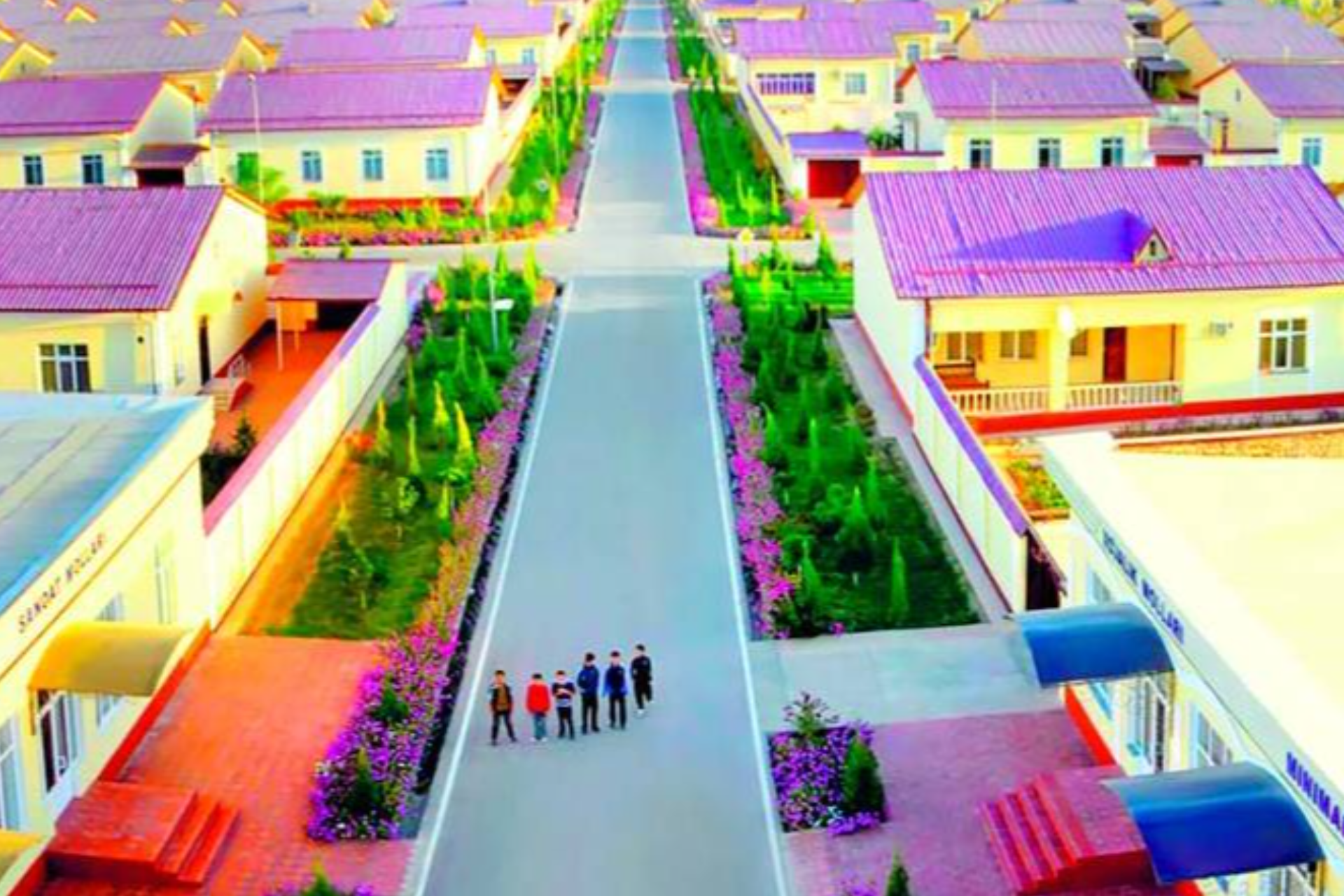
According to Abdullah Niyazov, the project manager at Passive House (Dubai), the project's initiator , the pilot phase includes 50-100 homes in the Tashkent region. Construction costs are $ 500 per square meter, with a conservative market price of $1,000 per square meter. This results in a gross margin of over 100 % thanks to direct contracts with manufacturers of certified components and local production. This is crucial, as the "Green Mahalla" project isn't a ground-up experiment, but rather the transfer of a proven model to a new environment.
The world has entered an era when climate change has ceased to be a scientific prediction and has become a part of everyday life. Central Asia is among the regions most vulnerable to climate change. Average temperatures there are rising faster than the global average. The glaciers of the Tien Shan and Pamir mountains, which provide water to millions of people, are rapidly shrinking. Hot periods are becoming longer, winters less predictable, and the load on the country's energy system is increasing annually.
For Uzbekistan, construction has long ceased to be a purely architectural or engineering issue. Today, it's a matter of energy security, environmental sustainability, and the quality of life for future generations. Therefore, projects that simultaneously conserve resources, reduce environmental impact, and create comfortable living conditions are becoming increasingly important. One of the most ambitious projects of recent years is the "Green Mahalla," the first residential neighborhood in Central Asia fully focused on the principles of energy independence and climate resilience.
New construction philosophy

Uzbekistan has aready taken the first significant step toward green construction. Presidential Decree No. PP-100 of March 2025 mandated the use of energy-saving equipment in the design of new facilities. The government has set the direction for the construction industry, but a logical question arises: which international standard can ensure maximum efficiency? The answer is offered by Passive House Project Management (Dubai), which is implementing a project based on the Passive House Institute (PHI) standard. PHI is today considered the global benchmark for energy-efficient construction. Millions of square meters of residential and public buildings in dozens of countries have already been certified according to this standard. Its effectiveness has been proven in both the harsh climate of Northern Europe and the hot regions of the Middle East.
The main idea is simple: a house should not consume energy, but conserve it as much as possible. Thanks to high-quality thermal insulation, airtight structures, modern ventilation with heat recovery, and the use of renewable energy sources, such buildings require virtually no traditional heating or air conditioning. Essentially, it is a house that produces as much energy as it consumes.
Mahalla of the 21st century
According to Abdullah Niyazov, the project manager at Passive House (Dubai), the project's initiator , the pilot phase includes 50-100 homes in the Tashkent region. Construction costs are $ 500 per square meter, with a conservative market price of $1,000 per square meter. This results in a gross margin of over 100 % thanks to direct contracts with manufacturers of certified components and local production. This is crucial, as the "Green Mahalla" project isn't a ground-up experiment, but rather the transfer of a proven model to a new environment.
The traditional Uzbek mahalla has always been more than just a residential neighborhood, but a unique system of social relations, mutual assistance, and collective responsibility. The project proposes to preserve this philosophy, filling it with modern content. Here traditional values and advanced technologies coexist. Every home becomes energy independent. Each family receives minimal utility costs. Each quarter reduces the load on the national power grid. This is no longer just a residential complex. This is a model of the future city.
A house that is not afraid of tariffs
Rising electricity prices are becoming a global trend. Therefore, energy efficiency is gradually becoming not an element of comfort, but an economic necessity. The Green Mahalla project includes solar power generation, energy storage systems, efficient ventilation, and engineering solutions that will virtually eliminate traditional energy consumption. Residents of such houses are no longer dependent on the constant rise in utility rates. The house becomes an independent energy system. For a family, this means decades of stable expenses.For the state, this means reducing the burden on energy infrastructure. 
Europe already lives by these rules
The project's compliance with international requirements makes it particularly relevant. The Green Mahalla fully complies with the European concept of NZEB ( Nearly Zero Energy Building) buildings with almost zero energy consumption. Since 2020, this standard has been mandatory for the construction of new buildings in all countries of the European Union. However, Europe is already moving further. From 2024, the transition to the Zero Emission Building (ZEB) standard will begin, which provides for virtually zero greenhouse gas emissions during the operation of buildings. This means that in the coming years, houses like these will become the global norm. Uzbekistan is now able to build next-generation housing without having to catch up with the global market. In fact, building according to the Passive House standard allows the country to prepare in advance for future requirements of international carbon regulation and environmental certification.
Samarkand is becoming a center of the green economy
The project takes on particular symbolism against the backdrop of the decisions taken at the Assembly of the Global Environment Facility (GEF), which took place in June 2026 in Samarkand. Addressing the participants of the international forum, President of the Republic of Uzbekistan Shavkat Mirziyoyev declared Samarkand the "Green Investment and Innovation Capital of Central Asia." This statement was more than just a beautiful political declaration. At the same time, the country's largest institutional initiatives in the field of sustainable development were presented:
— establishment of the Ulugbek Research Institute for Sustainable Development;
— National Climate Change Center;
— interstate consortium "Clean Air".
All these projects form a new architecture of environmental policy in Uzbekistan. It is precisely into this system that the Green Mahalla fits naturally. It becomes the practical embodiment of the state strategy for decarbonizing the economy.
When ecology becomes profitable
For a long time, it was believed that environmental projects required exclusively government subsidies. Today the situation has changed. Ecology is becoming an independent branch of the economy. Each PHI-compliant passive house reduces CO₂ emissions by 10–12 tons per year. For 100 houses, that's over 1,000 tons annually. At the current market price of carbon credits at $30–50 per ton, this represents a stable additional cash flow. Given the projected price increase to €125 by 2030, the total annual income from carbon rent could exceed $63,000 , and this figure is only set to rise. The project fits perfectly into the new legal reality. This is no longer just an environmental benefit; it is a real financial asset.
In the international market, carbon units are gradually becoming a full-fledged investment instrument.
Since 2026, Uzbekistan has officially permitted the export of carbon credits (up to 80% of those generated). The Ministry of Economy and Finance has launched a national carbon credit registry. And on July 1, 2026, a requirement requiring the use of at least 25% sustainable materials in construction will come into effect , a requirement that the PHI standard exceeds by a wide margin. Significantly, Article 6.4 of the Paris Agreement creates a centralized international carbon credit market under the auspices of the UN. The team estimates that Green Mahalla has every chance of becoming one of the first registered projects in the region, which will ensure maximum liquidity and confidence from international buyers.
Investing in the future

During the 5th Tashkent International Investment Forum, the President of Uzbekistan outlined the country's new economic strategy. Over the past five years, the republic has attracted more than $123 billion in foreign investment. In 2025 alone, the volume of investments reached $43 billion . International reserves exceeded $70 billion. The country's gross domestic product is expected to exceed $180 billion in the near future.
At the same time, the creation of the Tashkent International Financial Center with a special legal regime, tax incentives, and guarantees of free capital movement was announced. The priorities of the state investment policy include green energy, artificial intelligence, data centers, transport and logistics infrastructure, mining, tourism, and the agro-industrial complex. Against this backdrop, the Green Mahalla appears particularly timely. It combines several strategic areas of the country's development: ecology, construction, innovation, investment, and regional development.
From a pilot district to a new construction industry
The first phase of the project involves the construction of 50–100 houses in the Tashkent region. However, the team itself sees the pilot as only the beginning of a large-scale reform. Following the project's implementation, joint work is planned with the Ministry of Construction and relevant organizations to amend building codes. The main goal is to make Passive House standards part of national building policy. This will create a completely new market, generating demand for modern windows, heat-recovery ventilation systems, highly efficient thermal insulation materials, and utility equipment. There will be a need to train a new generation of architects, designers, installers and energy auditors . Thousands of specialists will be able to obtain new jobs in the high-tech construction industry.
The future starts today
History shows that technological revolutions begin with one bold project. At one time, such projects included railways, hydroelectric power stations, and digital communications. Today, energy-efficient construction is becoming a similar revolution. The "Green Mahalla" is much more than a residential area. It's a new economic model, an investment in people's health, and a contribution to the country's energy independence. It's practical proof that Uzbekistan is capable of not only adapting to global environmental trends but also shaping them in Central Asia. A house that doesn't pay for electricity seemed like a beautiful fantasy until recently. Today, it is becoming a symbol of the new Uzbekistan: modern , technological, open to investment, and responsible to future generations.
Nargis Kosimova