

The Black Market for Monitor Lizards: A Rare Species Sold as a “Cancer Cure” Could Disappear Forever
Uzbekistan is home to 64 species of reptiles, of which 21 species—nearly 34 percent—are considered rare or endangered and are listed in the Red Book of the Republic of Uzbekistan. The Grey Monitor Lizard is among these protected species. It is also included in Appendix I of the Convention on International Trade in Endangered Species of Wild Fauna and Flora (CITES), which effectively prohibits international commercial trade in the species.
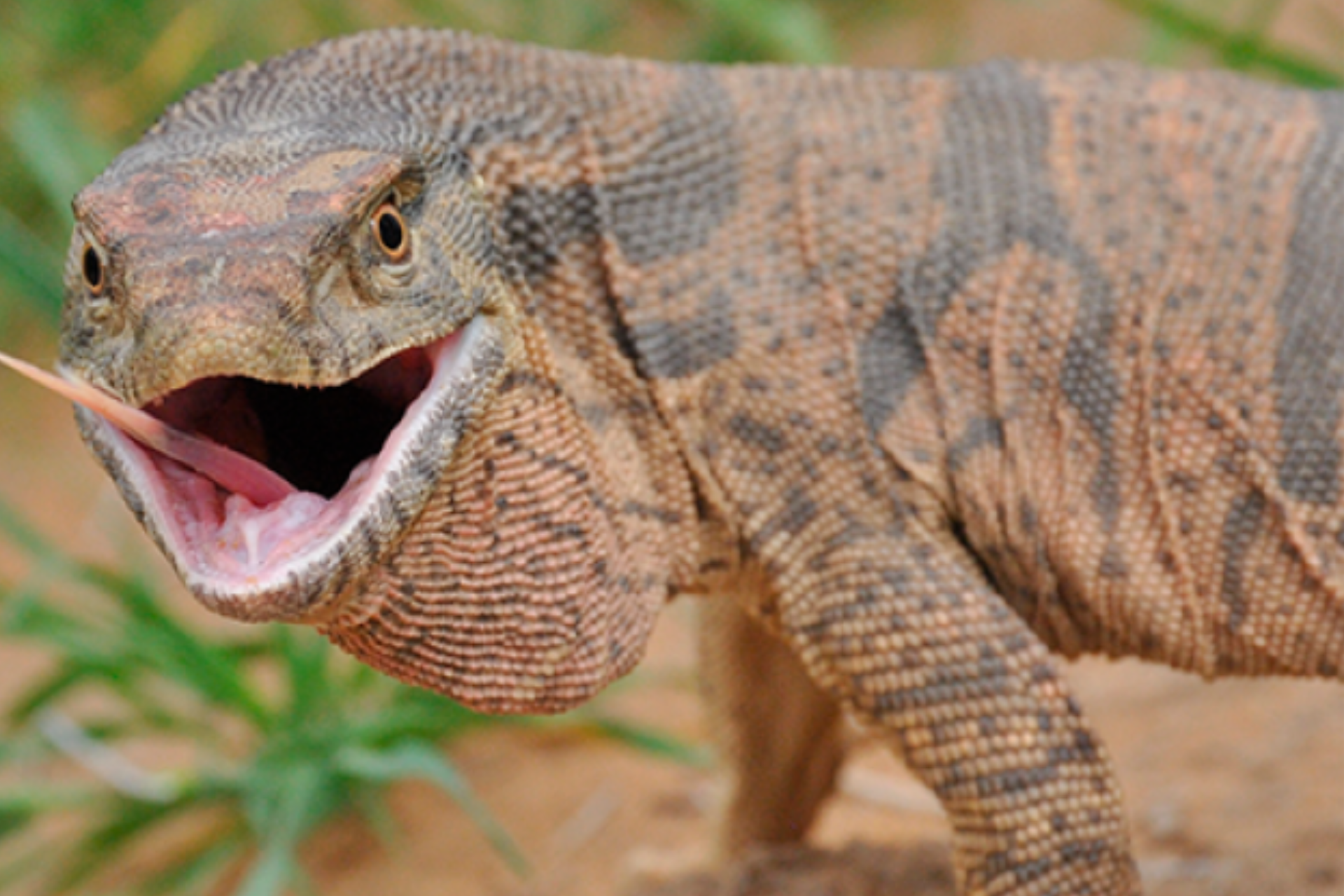
The Grey Monitor Lizard (Varanus griseus) is one of the largest reptiles in Central Asia and an important component of Uzbekistan's desert ecosystems. Feeding on rodents, snakes, insects, and other small animals, it plays a crucial role in maintaining ecological balance by regulating pest populations. Today, however, this rare species is facing the threat of extinction due to poaching, habitat destruction, and the spread of pseudoscientific myths claiming that its meat possesses medicinal properties.
Uzbekistan is home to 64 species of reptiles, of which 21 species—nearly 34 percent—are considered rare or endangered and are listed in the Red Book of the Republic of Uzbekistan. The Grey Monitor Lizard is among these protected species. It is also included in Appendix I of the Convention on International Trade in Endangered Species of Wild Fauna and Flora (CITES), which effectively prohibits international commercial trade in the species.

According to Temur Abduraupov, a herpetologist and junior researcher at the Institute of Zoology of the Academy of Sciences of Uzbekistan, the decline in the Grey Monitor population is driven by several factors. These include the large-scale conversion of desert habitats for agriculture, road construction, industrial development, and expanding settlements, all of which destroy the species' natural habitat. Illegal hunting, widespread fear of monitor lizards, and persistent myths that their meat can cure cancer have also contributed significantly to their decline.
Only a few decades ago, Grey Monitors could commonly be found on the Ustyurt Plateau, in the Kyzylkum Desert, and across other arid regions of Uzbekistan. Today, they have virtually disappeared from some of these areas.
One of the greatest threats to the species is the widespread dissemination of false information about the supposed medicinal properties of monitor lizard meat. In recent years, social media and some practitioners of alternative medicine have promoted claims that consuming Grey Monitor meat can cure cancer. However, there is no scientific evidence supporting these claims.
Laboratory analyses conducted by specialists from the Institute of Zoology of the Academy of Sciences of Uzbekistan found that the chemical composition of Grey Monitor meat is not significantly different from that of ordinary poultry. Moreover, because monitor lizards feed on wild rodents, snakes, and insects, they may carry parasites, toxic substances, and disease-causing pathogens. Consequently, consuming their meat may pose health risks rather than provide any medical benefit.
According to Olim Imomov, Head of a Department at the Republican Specialized Scientific and Practical Medical Center of Oncology and Radiology, Candidate of Medical Sciences, and senior oncologist, there is no scientific evidence that monitor lizard meat has any effect on cancer treatment.
He emphasizes that throughout the history of modern medicine, there has not been a single documented case in which a patient recovered from cancer as a result of consuming monitor lizard meat. Cancer can only be treated using scientifically validated diagnostic methods and evidence-based medical therapies.
Despite this, demand for Grey Monitors continues to grow. On the illegal market, they are sold not only for their meat but also for their skins.
In an effort to uncover the illegal trade in Grey Monitors, the Public Association "Ekolog", together with volunteers, law enforcement officers, and environmental inspectors, organized a series of raids in several regions of Uzbekistan. During these inspections, illegal sales points for Red Book-listed animals were identified, supply chains were traced, and cases of Grey Monitors being kept in captivity for commercial purposes were documented. The findings confirmed that an illegal market for these protected reptiles continues to operate, with many buyers misled by false claims that monitor lizard meat can cure cancer. This artificially created demand is driving the illegal hunting and large-scale destruction of one of Uzbekistan's rarest wildlife species.
According to available information, illegal trade is particularly widespread in the Fergana, Namangan, Kashkadarya, Surkhandarya, Bukhara, Navoi, and Khorezm regions.
A neighborhood leader from Pop District in Namangan Region, who requested anonymity, reported that a live Grey Monitor can sell for between 5 and 10 million Uzbek soums, depending on demand. The animals are typically captured by poachers working on commission before being sold to intermediaries or so-called "traditional healers," who convince seriously ill people to purchase monitor lizard meat as a treatment for cancer.

Similar cases have also been documented in the Asaka District of Andijan Region, the Yazyavan District of Fergana Region, and the Dehkanabad District of Kashkadarya Region.
One of the most significant criminal cases involved a resident of Dehkanabad District in Kashkadarya Region. During a law enforcement operation, officers discovered 20 live Grey Monitors, 43 dead animals, and 38 processed skins at the suspect's residence.
The court ordered the offender to pay 141.9 million Uzbek soums in environmental damages and sentenced him to three years of restricted liberty. The surviving 20 monitor lizards were released back into their natural habitat in the desert area of Mubarek District, while the confiscated skins were destroyed in accordance with legal procedures.
Uzbekistan's legislation imposes severe penalties for harming protected wildlife. Under Cabinet of Ministers Resolution No. 649 of December 7, 2023, the environmental damage caused by killing a single Grey Monitor is assessed at 34 million Uzbek soums.

In addition, criminal and administrative liability for the illegal capture, possession, transportation, and sale of Red Book-listed species is established under the Law of the Republic of Uzbekistan "On Wildlife", the Criminal Code, and the Code of Administrative Responsibility.
The species' biological characteristics also contribute to its vulnerability. Female Grey Monitors lay between 6 and 38 eggs, but approximately 30 percent fail to hatch. Many hatchlings become prey to birds of prey and wild mammals, and only 5–10 percent survive to reach sexual maturity, which occurs at around three years of age. As a result, natural population recovery is extremely slow.
According to experts, despite being protected for more than three decades, Grey Monitor populations have declined by nearly half in some regions of Uzbekistan. Climate change, desertification, road construction, and industrial development continue to fragment and degrade their natural habitats.
Environmental experts emphasize that protecting the Grey Monitor requires a comprehensive approach. This includes strengthening habitat protection, intensifying anti-poaching enforcement, combating misinformation about the alleged medicinal value of monitor lizard meat, improving environmental education, conducting public awareness campaigns, and applying modern monitoring technologies such as Geographic Information Systems (GIS) and satellite surveillance. Ensuring that wildlife crimes are consistently investigated and prosecuted is equally essential.
Feruzbek Sayfullaev