

Corporal Wojtek: The Soldier Bear Left Behind Bars
History is filled with stories of war heroes. Yet not all of them were human. A bear named Wojtek, who served alongside Polish soldiers during World War II, remains one of the most famous military animals in history. His life became a symbol of courage, loyalty, and the often-overlooked consequences of war.
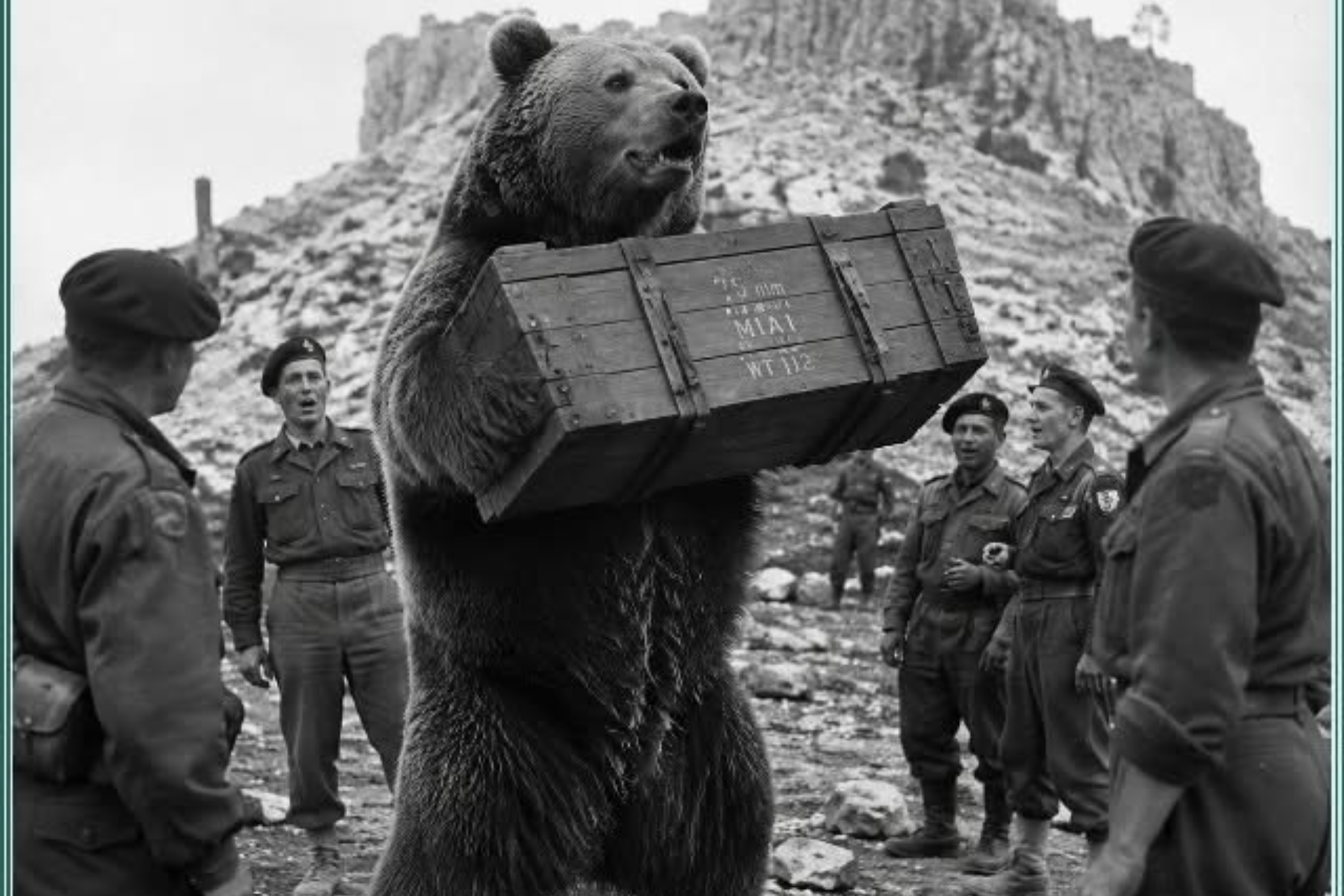
Wojtek’s story began in 1942. As the Polish Army under the command of General Władysław Anders was moving through Iran after its evacuation from the Soviet Union, soldiers came across a small orphaned brown bear cub. Moved by compassion, they bought the cub from a local boy and named him Wojtek, a Polish name meaning “joyful warrior” or “happy soldier.” At the time, he was too young to survive on his own, so the soldiers fed him condensed milk from a makeshift bottle. In this unusual way, Wojtek became part of the military unit and grew up among the men.
Over time, he became much more than a mascot. Wojtek lived with the soldiers, followed them during training, and shared their daily routines. According to veterans’ accounts, he was intelligent, playful, and remarkably comfortable around people. He enjoyed drinking beer and was known for chewing cigarettes rather than smoking them. One of his most amusing habits was standing on his hind legs and appearing to salute senior officers. In 1944, the Polish II Corps took part in the Battle of Monte Cassino in Italy, one of the most significant and difficult battles of World War II. Transporting artillery ammunition through the mountainous terrain was an exhausting task for the soldiers.
It was during this campaign that Wojtek performed the act that would make him famous. Witnesses recalled that he watched soldiers carrying heavy crates of artillery shells and then began helping them. The bear carried ammunition boxes weighing around 45 kilograms (100 pounds) from supply trucks to artillery positions. What amazed everyone was that he carried out this task repeatedly and never dropped a single crate. Wojtek’s efforts quickly became legendary within the unit. In recognition of his service, the Polish Army officially enlisted him and promoted him to the rank of corporal. As a result, he became one of the very few animals in history to receive a military rank. Later, the image of a bear carrying an artillery shell was adopted as the emblem of the 22nd Artillery Supply Company of the Polish Army.
When the war ended, Wojtek’s life changed dramatically. The Polish unit was disbanded, and the bear was transferred to Edinburgh Zoo in Scotland. This marked the beginning of the saddest chapter of his life. Having spent most of his life among soldiers, Wojtek found it difficult to adapt to life in a zoo. He showed little interest in other bears and often appeared lonely and withdrawn. However, his former comrades never forgot him. Polish veterans regularly visited Edinburgh Zoo to see their old friend. According to eyewitnesses, whenever Wojtek heard people speaking Polish, he would immediately become excited, stand on his hind legs, and greet them enthusiastically. Some former soldiers even climbed over barriers to hug him and relive memories of their shared past.
Corporal Wojtek died in 1963, but his legacy lives on. Today, statues honoring him stand in Poland, Scotland, and several other countries. Books have been written about his extraordinary life, and documentaries have helped introduce his story to new generations. Wojtek’s story is more than the tale of a bear. It is a story about the impact of war on both humans and animals, and a reminder that friendship and loyalty can transcend species. To the soldiers who knew him, he was not merely an animal but a comrade, a companion, and a fellow soldier.
For that reason, Corporal Wojtek remains one of the most remarkable and touching figures in military history.